Doubt as the Temper of Faith

One aspect of the faith of others that I find myself wavering back and forth between admiration/jealousy and derision is complete and utter faith. The kind of faith that is immune to logic and reason, impervious to the tendrils of tragedy, unyielding in the face of all that can be proven.

I waver back and forth between these outlooks, depending on what I am struggling with daily, and what I find myself in need of. When I am looking for the comfort of an answer, for the surety of righteousness and the unyielding firmness of dogma, I find myself wallowing in envy for the doubtless faith that others hold.

However, when I am (in those rare moments) more honest with myself, I thank the Lord for the gift of doubt that he has given me. It allows me insight into my weaknesses, and to come closer to an understanding of why my doubt is necessary if I am to follow the path that God continues to reveal to me, bit by bit.

One of the things that I envy in those who have a more unshakeable faith that I is the, perhaps erroneous, belief that they can see, or at least imagine that they can, more of the Lord’s path than I am privy to. Each day, I feel as if I am discovering just enough of the path that He has set forth for me so that I may keep from falling off the mountainside. For those with a deeper faith, I cannot help but believe that they may be able to see far enough to not only keep from tipping off the mountain into oblivion, but to feel confident in the steps that they take.

I am sure that, at least in part, these intimations of mine are fanciful hopes, hopes that I wish to find if God blesses me with a deeper and firmer faith. But I am also aware that this weight of doubt that rests upon my heart at is, at the very least, a call to introspect and try to understand why I doubt. Hopefully, through this doubt, I can be led to understand the task that God has set forth for me.

Continuing with Hope, there are moments where this doubt that I have is tempered by hope, which then, I hope, tempers my faith, and makes it stronger in the face of hardship and challenge as I move forward in life. Hope allows me to try and find a purpose in the doubt, and the purpose that I see is that it allows me to develop an incrementally more profound understanding of why I doubt. Oftentimes, the reason for my doubt is not a doubt for the Providence of God, but a doubt at my ability to serve Him faithfully. I know that I am unable to do so, at least not always, and when my doubt is strong, it says that if I am unable to faithfully serve God at all times, then it is not worth it at all. When my doubt is tempered by hope, I can see that the moments of weakness, the failures, the missteps and sinning is a chance for me to look inwards at how I can be a better man, and look outwards as to how I can create a life and existence that is more conducive to living a holy, purposeful and God centered life.

When my doubt is tempered by hope, it has the chance to temper my faith and lead me to a place of firmer belief, more active worship, more engaged living and a more honest account of my inherent sinfulness. When doubt is tempered by hope and faith by the hopeful doubt, then perhaps I may be able to find my way to a more meaningful journey of faith.

Middle American Ennui

I am a Catholic, attending a shrinking parish.

I am a Ph.D student, attending a dying university, teaching struggling students on a shoestring budget.

I am a resident of the lower Midwest, driving on pockmarked roads, past crumbling buildings, with deflated housing prices and fallow fields.

I am a citizen of the USA, where trust in centuries old institutions is at an all time low, where the oligarchy has grown sacrilegiously wealthy, where people can work 60 hours a week and barely afford to subsit.

At what point does change become necessary? At what point does hope lose its power? In all honesty, even with the struggles that I gave, I am one of the lucky ones. What do we do for those who are not fortunate enough to have the blessings that I do – a fulfilling calling, a loving wife, a supportive family, a loving God? At what point do we force the issue to the fore and take control, instead of watching the country of which we are a part of slowly die in front of us and our children?

Bishops, Biden and the Eucharist

Before I begin to write about the controversy that has engulfed American Catholicism (and much of America that is not Catholic), I feel that it is only right for me to admit that I am, at best, a very bad Catholic. There are many ecumenical teachings that I am unable to incorporate into my own beliefs, I have (and still do in many ways) lived in sin and I am at odds with some of the most fundamental teachings of not only the Catholic church, but Christianity as a whole. At the same time, I do still consider myself to be a Catholic – perhaps in a way not so different from the way that Biden does.

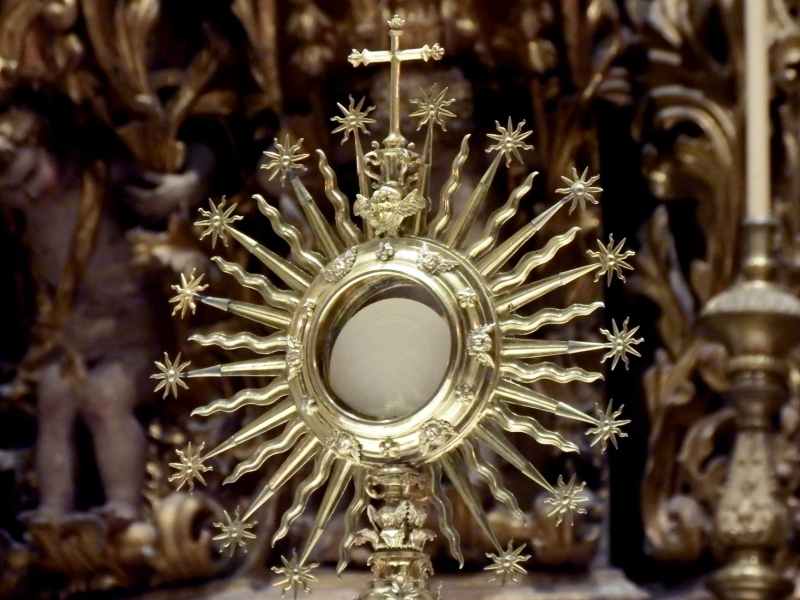
For those who may be unaware, the United States Council of Catholic Bishops recently met and discussed possible changes to the Eucharist, with much of the purported conversation said to be on changes to who may be eligible to receive the Eucharist. For those of you who are Christians but not Catholic, this is of especial importance to Catholics, as the belief is not that the Eucharist is a symbolic meal, but the literal incarnation of the body and blood of Jesus Christ, and participating in this sacrament brings one closer to Christ Himself (to the best of my limited understanding).

This then leads us to the controversy around President Joe Biden. Biden will often, both on the campaign trail and otherwise, talk about his personal life as a devout Catholic, and how it influences his life on a wide scale. However, one of the belief that Biden holds in his public life is in the legal right of women to have access to abortions. For many Catholics, this public action and support by Biden is in direct contradiction to Catholic teaching and contributes to the wholesale genocide of American pre-born children.

As an aside, in order to be transparent, I should say that I am not pro-life (if you are at all interested, you can read my thoughts on this in my essay “The Sanctity of Suicide”). At the same time, I am anti-abortion. For me, the difference comes down in two essential steps – I believe that life begins at conception, and I believe that if one is to condone the killing of a human life (specifically suicide), there needs to be a conscious decision made, which is completely impossible for a pre-born infant.

Due to Biden’s support of the legality of abortion, many Catholics believe that Biden goes in direct contradiction of the teachings of the Catholic Church – this action is one that many believe should bar Biden from participating in Communion, which is in many ways removing him from the ability to actively participate in the Catholic tradition.

At the end of the day, I do believe that Biden should be refused the Eucharist, due to his active and wilful denial of the teachings of the Catholic Church. I do not believe that there is a single practicing Catholic on this planet who can be said to be in full agreement with the teachings of the Catholic Church (I would be hard pressed to even say that the Pope himself does), the main difference in Biden and, say, someone like me, is Biden’s public and political role. Someone condoning this wholesale slaughter of innocent life that is unable to defend itself is not someone who I believe should be allowed to be in communion with the Catholic Church.

And, to be honest, someone as bad of a Catholic as myself? I am not sure that I deserve to be in communion either. Perhaps, for both Biden and myself, as well as anyone else out there who considers themself to be a Catholic (and particularly those that, like me, consider themselves to be bad Catholics on their best day), the question is not whether or not we deserve to be in communion – not whether we are worthy of being in communion with Christ, but what promotes the most Christ like behavior. And, to be honest, I do not know what the answer to that question is.

The Far Side of Reason

As someone who has spent a significant amount of time in both a deeply religious and belief based world and one that is verging on what can be called scientism, I have struggled, at times quite deeply, with the seemingly irreconcilable nature of these two modalities of thinking.

Faith and belief, even in the face of my years conducting research and being ingrained in the scientific method is something that has always fascinated me. Beyond that, it has been something that I have always felt just out of my reach, just too far of a leap for me to make. Seeing those who fully believed, who had a deep faith that colored all facets of their lives, made me long for this grounding to live my own life in.

Within this longing, I perhaps saw too great a dichotomy between the world of science and the world of belief – in my particular case, in Catholicism. How could a world that is 4.5 billion years old, in a universe that is almost 14 billion years old, be defined in a book that only addresses 15,000 years at most? While perhaps not articulated at the time, it was this conflict that first brought me out of my belief and into a world that was not even defined by a lack of belief, but by a constant searching.

Throughout the millennia, from Plato to Saint Augustine to Kierkegaard to Nietzsche (and far beyond), there have been thinkers who have been both able and unable to reconcile the world of belief and the world of material knowledge. I am far from unique on this topic – it was my biggest struggle for many years, and still follows me today, and I am grateful for those teachers and thinkers who have come before me and laid the groundwork for my own discovery.

Perhaps the most important lesson that I have come to learn is defined by the saying, which I steal from Bishop Robert Barron, that true faith is found on the far side of reason.

To me, this means that we have a duty to engage in a structured, disciplined and reasonable attempt to understand the world around us. This activity does not require the Bible, the Torah or any other religious text (although many religious beliefs from these texts are present, in an implicit manner, in the reason that we do engage in). It is only after, in good faith, that we have run up against the limits of human reason and understanding that a true, living faith can find its way into our lives.

This is a faith that I find I can comfortably sit within. It is not a faith that I have yet defined with definitions provided by any major religious institution, but it is certainly one that enrichens my life and my understanding of the world around me. This is what faith has done for me – it is not something that I seek in order to abate the terror of death, to justify the primacy of my worldview or even provide me comfort. In many ways, the faith that I have found has made me far more uncomfortable than I was before. No. For me, faith is the ability to see my life in a manner that is more than simply reasonable or logical, something that is based in the material world, something that is defined by no more than the scientific method. Perhaps this is a way for me to cope with the materialistic and painfully capitalistic world that we find ourselves in. Even if this is the case, I believe that it is so much more than that as well – and the reason that I believe that is, well, faith.